

Retailers lose up to 30% of revenue due to siloed data. Poor data quality, fragmented systems, and over-reliance on IT slow decision-making and cost businesses millions annually.
Here’s how to fix it:
- Centralized Data: Combine all your systems (POS, e-commerce, ERP) into one platform.
- Real-Time Updates: Ensure teams always work with the latest, accurate data.
- Self-Service Analytics: Enable non-technical users to analyze data without IT.
- Automated Cleaning: Eliminate errors with AI-driven tools for consistent, reliable insights.
The result? Faster decisions, better customer insights, and improved team productivity – all without waiting on IT. Retlia‘s platform can be set up in 60 days to unify your data and transform your operations.
Key Stats:
- $12.9M/year: Cost of poor data for businesses.
- 67% of executives don’t trust their analytics.
- 30% revenue loss due to data silos.
Ready to unlock the power of trusted, real-time data? Let’s dive in.
Get Retlia: Give Your Team Access to Trusted Data
The Problem: Common Retail Data Management Challenges
Midsize retailers today face a tough reality: their systems are often disconnected, and their data is unreliable. Despite collecting massive amounts of information on customers, sales, and inventory, turning that data into actionable insights remains a struggle. In fact, 77% of retailers admit they can’t effectively extract useful insights from their data, and 67% say they can’t even capture it in a usable format [1].
This isn’t just a technical headache – it’s a roadblock to making quick, confident decisions. Imagine merchandising teams working without real-time inventory updates or marketing teams relying on outdated customer profiles. Every decision becomes a gamble. Let’s dig into how fragmented systems amplify these problems.
Fragmented Systems and Data Silos
One major culprit behind these challenges is the way retail data often lives in isolated systems. Think about it: point-of-sale systems handle transactions, e-commerce platforms track online behavior, ERPs manage inventory, and marketing tools collect customer insights. But when these systems don’t talk to each other, data silos form. These silos block data flow, driving up costs and cutting into revenue.
Here’s the kicker: 60% of an organization’s data is either unknown or inaccessible to the people who actually need it, and 99% of executives have felt the sting of data fragmentation – whether through lost revenue or reduced profit margins [3][9]. One retailer, for example, over-forecasted holiday demand because their e-voucher data was stuck in isolation, leaving them with excess stock [1]. Beyond lost dollars, silos also stifle collaboration, slow processes, and lead to decisions that miss the mark [4].
How Delayed and Inconsistent Data Hurts Business
The damage caused by fragmented and unreliable data is immediate – and expensive. Poor data quality costs U.S. businesses roughly $3.1 trillion annually, or about 20% of their overall value [5]. Gartner estimates that the average organization loses $9.7 million per year due to bad data [6].
Delays in accessing data force teams to rely on outdated numbers, while inconsistencies create a false sense of confidence. The consequences can be catastrophic. Take JPMorgan Chase, for example: in 2012, they suffered a $6.2 billion trading loss because of errors in the data used for risk modeling [7]. In retail, these same issues can lead to mismatched stock levels, missed opportunities, and shrinking profit margins. On top of that, when teams can’t access data directly, they’re forced to depend heavily on IT, creating even more bottlenecks.
Over-Reliance on IT Teams
Speaking of IT bottlenecks, over-reliance on IT for data access is another major hurdle. Business teams often need IT to create reports or analyze trends, which slows down decision-making. This dependence forces teams into creating manual, ad hoc reports – reports that are often riddled with inconsistencies and errors [8]. Without centralized, accessible data, strategies end up being based on outdated or incomplete information.
The real solution isn’t just hiring more IT staff or adding manual processes. What retail teams need is direct access to centralized, reliable data. This kind of access empowers them to make fast, informed decisions without waiting in line for IT support.
The Solution: Core Features of Retlia‘s Data Management Platform
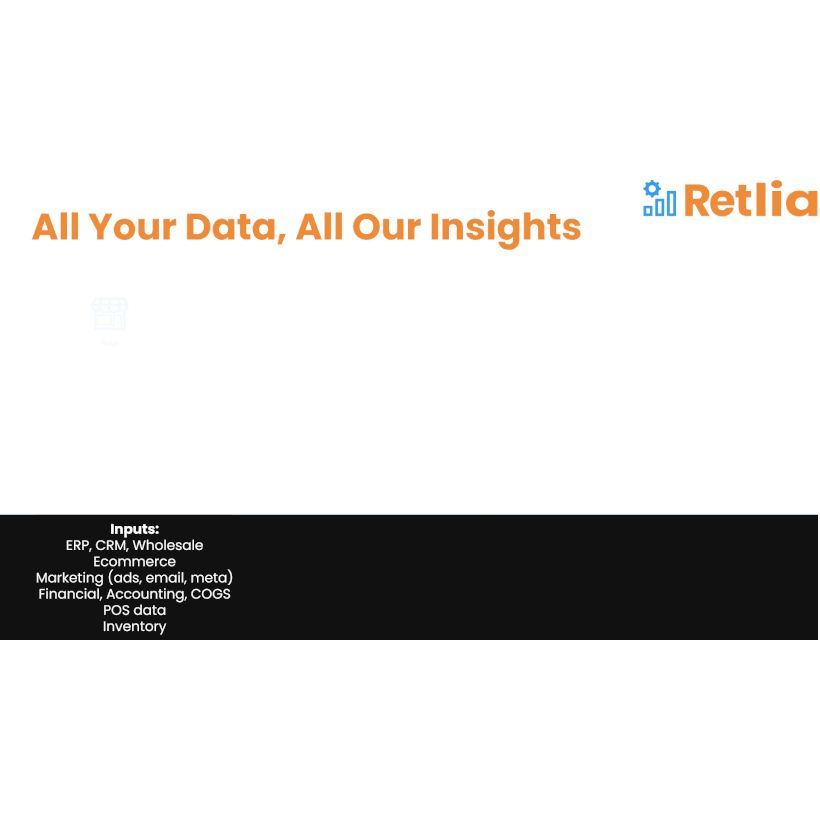
The hurdles we’ve discussed – fragmented systems, unreliable data, and dependence on IT – don’t have to be the norm. Retlia’s data management platform tackles these issues head-on with three main features that reshape how retail teams interact with their data. The result? Teams gain instant access to clean, consolidated data they can rely on.
Centralized Data Warehousing for Unified Access
Retlia’s solution starts by bringing all your data together. At its core is a centralized data warehouse – a single hub that consolidates information from every retail system into one cohesive, user-friendly environment. This eliminates the silos that often hinder midsize retailers by seamlessly integrating data from point-of-sale systems, e-commerce platforms, ERPs, and CRM tools into one unified repository [10].
The benefits are clear and measurable. For instance, when using data integration, 70% of data-ready grocery merchants experienced year-over-year revenue growth, proving that integrated data strategies can directly boost profitability [1]. On the flip side, 84% of executives report struggling with data silos, which, according to IDC, cost the global economy a staggering $3.1 trillion annually [11].
"If you don’t have the data, you can’t make good decisions. It’s as simple as that. More innovation can actually occur by accessing all the data."
– Pete Peranzo, Co-Founder, Imaginovation [10]
Retlia’s centralized approach is more than just a storage solution. The platform automatically cleans and standardizes incoming data, creating a single source of truth for retail executives. This unified system provides a comprehensive 360-degree view of the business, ensuring everyone is on the same page [23].
Self-Service Analytics for Non-Technical Teams
One standout feature of Retlia’s platform is its self-service analytics, which empowers business teams to analyze data without needing technical expertise. With intuitive dashboards and AI-powered reporting, users can ask questions in plain English and receive instant insights.
Retailers are already seeing the impact. Nexus Outdoors, for example, leveraged Retlia’s data warehouse to gain a full view of their operations. Their team shared:
"Thanks to our data warehouse with Retlia, we were able to capture a 360 view of our sales, products, and customers. Now we know our numbers and run the whole business off of them."
– Nexus Outdoors [2]
The platform integrates with tools like Snowflake and Tableau while offering retail-specific features, such as 360° customer profiles and customizable KPI dashboards. This enables teams to generate reports, identify trends, and explore data independently – cutting out the wait for IT support. In a world where the predictive analytics market is forecasted to grow from $14.9 billion in 2023 to $108 billion by 2033, this capability is a game-changer [12].
Real-Time Data Updates and Automated Cleaning
Access to data isn’t enough – it must also be accurate and up-to-date. Retlia addresses this by providing both real-time and batch data updates, ensuring that teams always work with the latest and most accurate information. Automated cleaning tools instantly detect and fix errors, eliminating the manual effort that typically consumes 60–80% of data scientists’ time [13].
This automation is critical, as poor data quality costs U.S. businesses over $3.1 trillion annually [13]. Retlia’s tools can identify inconsistencies, predict and fill in missing data fields [14], and adapt to changes in data sources over time. This ensures data accuracy without requiring human intervention.
"Data cleaning, or data cleansing, is one of the most time-consuming tasks in data science and analytics."
– Bragadeesh Sundararajan, Data strategist [13]
Here’s how it works: When a sale occurs in-store, the data flows directly into Retlia’s centralized warehouse. It’s cleaned, validated, and made instantly available to all teams. Marketing can monitor campaign performance in real time, merchandising can track inventory as it fluctuates, and executives can confidently review KPIs knowing the data is both accurate and current.
Real-time updates and automated cleaning enable teams to make quick, informed decisions without second-guessing their numbers.
How to Get Started With Retlia for Instant Trusted Data Access
Get Retlia up and running to deliver actionable insights in just 60 days.
Assess Your Current Data Landscape
Before connecting systems, take a close look at your current data environment. This step lays the groundwork for everything that follows and helps you avoid costly missteps.
Start with a data audit: map out where your data is stored, who has access to it, and how it’s being used [16]. Identify key stakeholders early – these are the people who will advocate for the project and drive adoption across teams like sales, marketing, merchandising, and operations, not just IT [15].
Finally, assign sensitivity levels to your data by categorizing it based on confidentiality and the potential consequences of exposure [17]. This classification will guide security settings and access controls when you configure Retlia.
Once you’ve completed this assessment, you’re ready for us to integrate your data sources with Retlia’s platform.
Select an integration approach that suits your existing infrastructure. Data-driven companies are 23 times more likely to outperform competitors in customer acquisition, so getting this step right is critical [20]. Retlia supports multiple connection methods, including APIs, direct database access, and file transfers, to fit a range of architectures. Help us work with your system providers like ERP and ecomm, to pick the best integration method and gain credentials, and we’ll begin the heavy work!
Sit back and relax! Retlia provides experienced retail-specific data engineers to do the heavy lifting. Retlia’s retail-specific schema uses efficient structures to simplify this process, understanding its structure will help your team maximize the platform’s capabilities. We set up ETL (Extract, Transform, Load) processes to move data into Retlia’s warehouse. To maintain data quality, enable updates for changed records only and validate the data regularly. This approach keeps your data current without overloading system resources. We configure security measures such as encryption for data at rest and in transit, along with role-based access controls to limit access based on user roles. Finally, we install retail-specific dashboards for exec KPIs, sales and margin, product and channel analysis, performance measurement and comparison, and customer analysis and segmentation.
For most midsize retailers, this technical setup takes about 4–6 weeks, aligning with the overall 60-day deployment goal. Retlia’s base package includes 100 hours of data engineering support to handle the heavy lifting, so your internal team can focus on aligning the platform with business goals.
Train Teams and Roll Out Dashboards
Once the platform is fully integrated, it’s time to test and verify, and then empower your teams by providing training and easy access to dashboards.
First, you’ll validate all data and key facts. The platform automates much of this, but you’ll need to verify that data flows correctly from each source.
When training, focus on explaining the purpose behind dashboard features rather than just teaching navigation [22]. Teams need to see how these tools solve real challenges in retail, not just memorize where buttons are.
Highlight core features to build confidence and encourage adoption [22]. Show how data filters can help users analyze specific subsets of data, like narrowing down sales leads by value.
Make training interactive with hands-on activities [22]. Use real business scenarios and sample data, and split attendees into small groups to practice analyzing and interpreting information. Activities like building specific charts or a dashboard scavenger hunt can make learning more engaging.
Encourage collaboration and knowledge-sharing among team members [22]. Demonstrate how users can click on chart elements to dive deeper into the data, which is especially helpful for investigations. Ask team members to present their findings in meetings to showcase the platform’s impact.
Avoid overwhelming users with jargon. Replace terms like "predictive forecasting" with simpler concepts like "segments" or "views" [22].
Lastly, ensure your team continues to grow with the platform by offering ongoing training and support [23]. Regular sessions will help users adapt to new tools and workflows over time.
Roll out the platform in phases, starting with power users in each department. As these users gain confidence, they can help their teams adopt the tool, creating internal champions who drive data-driven decision-making across the organization.
sbb-itb-03d92ea
The Results: Better Efficiency and Data-Driven Decisions
Retlia’s unified data platform is a game-changer, replacing outdated, fragmented reporting systems with instant, reliable insights that transform how businesses operate.
Faster and More Confident Decision-Making
With real-time, accurate data at their fingertips, teams no longer rely on guesswork. They can quickly analyze performance, identify trends, and adapt strategies on the fly.
Retlia’s centralized data warehouse ensures that everyone works from the same numbers – no more conflicting reports or debates over which dataset is correct. By consolidating data and offering self-service analytics, the platform allows teams to focus on interpreting insights and taking action, rather than questioning the data’s accuracy.
This speed is particularly critical during peak seasons or promotional periods. Teams can monitor campaigns in real-time, tweak pricing strategies based on immediate feedback, and address inventory challenges before they impact sales. This agility not only boosts operational efficiency but also paves the way for deeper customer understanding and sharper marketing strategies.
/
Better Customer Insights and Marketing Performance
Unified customer profiles revolutionize audience engagement. Retlia combines data from ecommerce platforms, POS systems, loyalty programs, and third-party marketplaces to create a complete view of each customer – something siloed systems can’t achieve.
Marketing teams gain access to real behavioral data, not just assumptions. They can track which customers engage with email campaigns, understand how purchase frequency varies by segment, and pinpoint products that drive repeat business. This clarity allows for precise targeting, improving campaign ROI and cutting down on wasted ad spend.
Customer segmentation becomes actionable. Teams can identify high-value customers, detect at-risk segments before they churn, and uncover cross-selling opportunities to boost average order values. Retlia’s household-level matching even reveals family purchasing patterns that single-customer views often miss.
With advanced attribution tracking, teams can see exactly which marketing efforts drive sales. They can link revenue to specific campaigns, channels, and touchpoints, enabling them to double down on what works and cut ineffective spending. This transparency justifies marketing budgets and helps allocate resources more effectively.
Product teams also benefit from comprehensive performance insights. They can identify top-performing items by region, recognize seasonal trends, and make smarter inventory decisions using unified sales data instead of fragmented reports.
Beyond enhancing customer insights, Retlia’s analytics empower every team to operate more independently and boost overall productivity.
Increased Team Independence and Productivity
Self-service analytics give teams the power to create dashboards and run reports without relying on IT. Thanks to Retlia’s intuitive drag-and-drop interface, even non-technical team members can explore data with ease.
This independence transforms productivity. Marketing managers can adjust campaigns based on real conversion data. Sales teams can monitor regional performance and refine territories in real-time. Merchandising teams can compare product performance across channels and timeframes in just a few clicks.
By interacting directly with the data, teams develop stronger analytical skills. Instead of passively consuming reports, they actively uncover trends, test ideas, and gain insights that drive meaningful improvements. This hands-on approach builds data literacy across the organization.
Meanwhile, IT teams are freed from routine reporting tasks. They can focus on strategic initiatives like platform optimization, enhancing security, and integrating new systems, while business teams handle their own analytics.
Collaboration improves when everyone works from a shared data foundation. Teams can share dashboards, align on priorities using consistent metrics, and make decisions faster. This common data language eliminates confusion and fosters cross-departmental synergy.
Over time, these productivity gains become even more impactful. What starts as basic reporting evolves into advanced analysis, uncovering new opportunities and giving businesses a competitive edge in the market.
Conclusion: Transform Your Retail Operations with Retlia
In retail, success hinges on speed, precision, and adaptability – qualities that fragmented systems simply can’t deliver. With 88% of businesses managing customer data across more than 20 applications and 82% pulling organizational data from over 50 sources [24], it’s clear that unified, reliable data isn’t just a luxury – it’s a necessity.
Retlia steps in as the solution, offering a centralized platform that provides clean, dependable analytics in real time. By consolidating data and enabling self-service analytics, Retlia eliminates the delays and inefficiencies caused by scattered systems, allowing your teams to act decisively without waiting on IT.
But this isn’t just about faster reports. Centralized data management has a ripple effect throughout your business – enhancing customer acquisition, improving profitability, and boosting retention [20]. With Retlia’s data warehouse, you’re not just organizing information; you’re setting the stage for long-term success and a real competitive edge.
Every department benefits from this unified approach. Marketing teams can quickly pinpoint the strategies that drive revenue. Merchandising teams gain early insights into emerging trends. Customer service teams get instant access to complete customer histories, enabling them to deliver better experiences. This isn’t just about creating better dashboards – it’s about reshaping how your entire organization operates.
And the potential doesn’t stop there. 91% of organizations agree that breaking down data silos would significantly improve their AI initiatives [24], putting your business in a prime position for future growth and innovation.
If you’re ready to take your retail operations to the next level, contact us today and discover how instant, unified data can make all the difference for midsize retailers.
FAQs
How does Retlia’s data platform help midsize retailers solve the problem of disconnected data systems?
Retlia’s Centralized Data Platform
Retlia’s platform simplifies how retailers manage their data by pulling everything – sales numbers, inventory levels, marketing stats, and customer feedback – into one unified system. No more juggling disconnected data silos or struggling to piece together information from multiple sources. With Retlia, your team gets real-time access to reliable insights that are ready to use.
This streamlined approach doesn’t just save time; it helps midsize retailers make smarter, quicker decisions. By reducing the need for constant IT support, it boosts efficiency across the board and sets the stage for stronger business results.
How can retailers save time on data integration with Retlia’s data management platform?
Integration with Retlia’s data management platform is as seamless as possible, including all retailers’ needed data validation and cleaning. This ensures the information is accurate, consistent, and ready for use. Bringing together data from multiple sources into a single, unified system is equally important, as it establishes a solid and reliable foundation for actionable insights.
It’s also a good upgrade it to your data inputs: we create scalable, high-performance data pipelines. Setting up a centralized data warehouse can simplify analytics and streamline decision-making. On top of that, planning for effective ETL (Extraction, Transformation, and Loading) processes is crucial. These processes help manage data flow efficiently while maintaining strong governance to ensure compliance and uniformity.
By trusting these steps to experienced retail data engineers at Retlia, retailers can minimize delays, enhance data quality, and equip their teams with dependable insights to make smarter, faster decisions.
How does Retlia’s self-service analytics help non-technical teams make better decisions and work more efficiently?
Retlia’s self-service analytics puts the power of data into the hands of non-technical teams. With direct access to reliable, actionable insights – no IT or data expert required – teams can independently analyze and visualize information. This speeds up decision-making, minimizes delays, and reduces the risk of errors.
By encouraging a data-first mindset, Retlia enables teams to make quicker, smarter choices that boost productivity and deliver stronger business results. With intuitive tools and accurate, real-time data, your team can concentrate on what truly matters: driving success.